
On the evening of the 17th Eastern American time, Ukrainian President Zelensky arrived in Washington, D.C. According to the latest schedule released by the White House, Trump will meet with Zelensky at the White House at 1:15 pm on the 18th Eastern American time (1:15 am on the 19th Beijing time); Trump will attend a multilateral meeting with European leaders at 3:00 pm on the 18th Eastern American time (3:00 am on the 19th Beijing time).
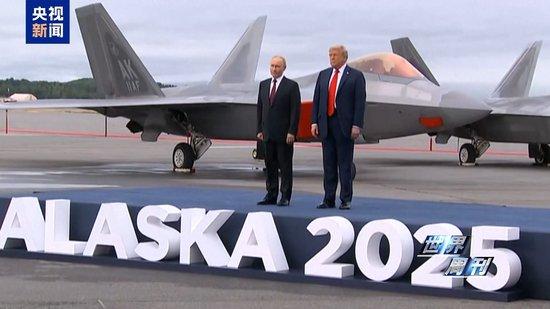
Before the meeting between the heads of the US and Russia in Alaska on the 15th, Trump stated in an interview that this meeting was like playing chess.
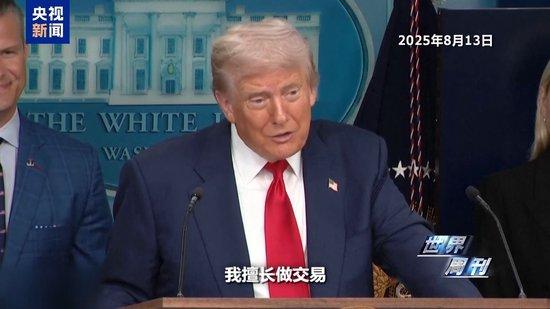
Trump: I am good at making deals
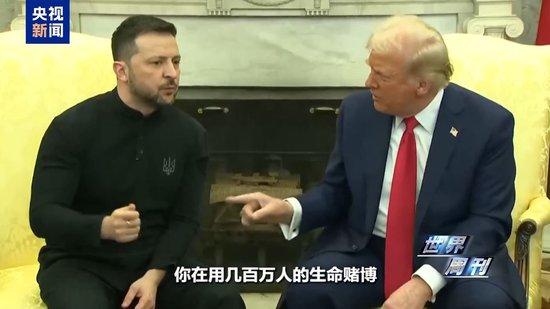
In February of this year, when Trump had an “oval office confrontation” with visiting Ukrainian President Zelensky, he repeatedly mentioned the phrase “third world war”.
You are gambling with the lives of millions of people, you are gambling with a third world war. Your actions show great disrespect to this country.
A “regional war” that could have been cooled down has turned into a “world war” that could destroy humanity, which means the involvement of major powers.
In the context of the Alaska meeting, the word “seeking peace” is particularly prominent.
I may know within two minutes of the start of the meeting whether or not an agreement can be reached. Because that is what I do, I am good at making deals.
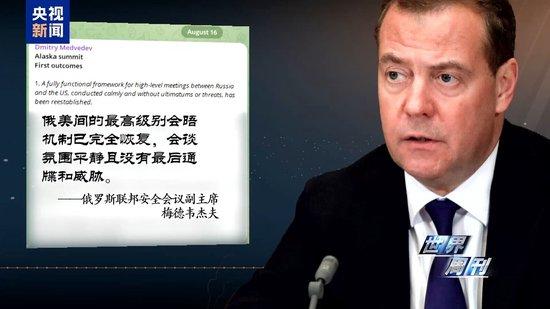
Medvedev: The highest-level meeting mechanism between Russia and the United States has been fully restored
On the same day, Medvedev, former President of Russia and current Deputy Chairman of the Russian Security Council, commented on social media: “The highest-level meeting mechanism between Russia and the United States has been fully restored, and the atmosphere of the meeting is calm without ultimatum or threat.”
On March 7, 2009, then-US Secretary of State Hillary Clinton and Russian Foreign Minister Lavrov simultaneously pressed a red button, announcing the “restart” of relations between the two countries. The button was inscribed with the Russian word “overburdened” above and the English word “restart” below. It is worth noting that Medvedev was the President of Russia at that time.
In August 2008, just three months after Medvedev took office as President, a conflict broke out between Georgia and Russia, which was seen as a watershed in the cracks between Russia and the West. The North Atlantic Treaty Organization (NATO) played a role in stabbing Russia’s “soft belly”.
After that, there were many US-Russia summit meetings and many “restarts”, but none of them fundamentally addressed the issue of NATO’s eastward expansion.
Vance: The United States Should No Longer Fund the War in Ukraine
The Wall Street Journal noted that in the past, whenever the United States has personally participated in European wars and achieved military advantages, it has always managed to end them successfully. For instance, during World War I, President Wilson attended the Versailles Peace Conference with the leaders of the United Kingdom and France, and after World War II, Truman shared the glory of peace creation with Stalin.
During the 1990s, the United States had an absolute voice in European affairs, benefiting from the “overwhelming advantage” achieved by Western countries during the Cold War and their subsequent global dominance. However, today, these conditions no longer exist. A policy briefing from the European Council for Defense and Security in June stated that since Trump began his second term, European NATO members have been increasing defense spending. Europeans have also questioned Washington’s role as the security guarantee for the European continent.
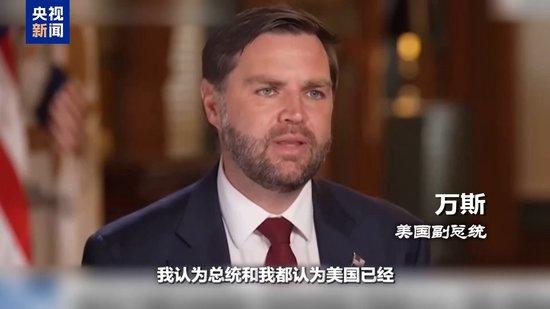
On August 11th, U.S. Vice President Vance stated that the United States should no longer participate in military aid to Ukraine. This was seen as a signal for the United States to avoid getting stuck in a war and trying to extricate itself from regional conflicts. “I think both the president and I believe that the United States should no longer fund the war in Ukraine, and we hope for a peaceful solution.”
U.S. Newsweek analyzed that a possible outcome of this Trump-Putin meeting could be to bring Putin back to the negotiating table as the “highest diplomat” and marginalize Europe in the Russia-Ukraine conflict. After this summit, European and Ukrainian leaders should prepare for the normalization of relations between Trump and Russia.
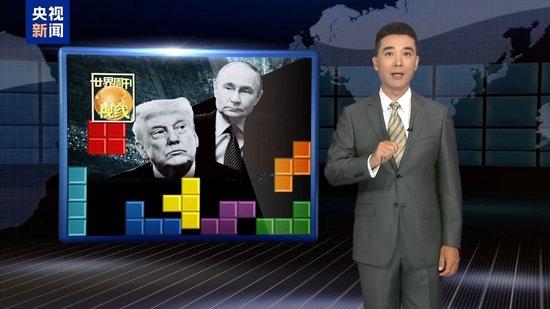
In 1984, a 29-year-old programmer named Pakittoff saw a jigsaw puzzle toy in a Moscow toy store and was inspired to develop a computer game. At that time, it was just when the U.S.-Russian heads were meeting in Iceland, and this game, with “Russia behind the iron curtain” as a gimmick, attracted a large number of players. Just like in “Tetris,” where blocks constantly fall and accumulate, one must skillfully deal with them to avoid chaos and collapse.
Today’s Alaska meeting between the U.S., Russia, is also like starting a “Tetris game” involving multiple national interests. At this critical moment, will this meeting really drive subsequent interactions between the U.S., Russia, and Ukraine, achieve just the right “offset clearance,” and bring new opportunities to the complex situation?