
**By Observer Network, written by Lin Chenli**
On August 17th local time, a new wave of demonstrations emerged in Israel, the largest since the outbreak of the latest round of Palestinian-Israeli conflict. Large numbers of protesters took to the streets across the country, calling for an end to the war and a negotiated release of hostages.
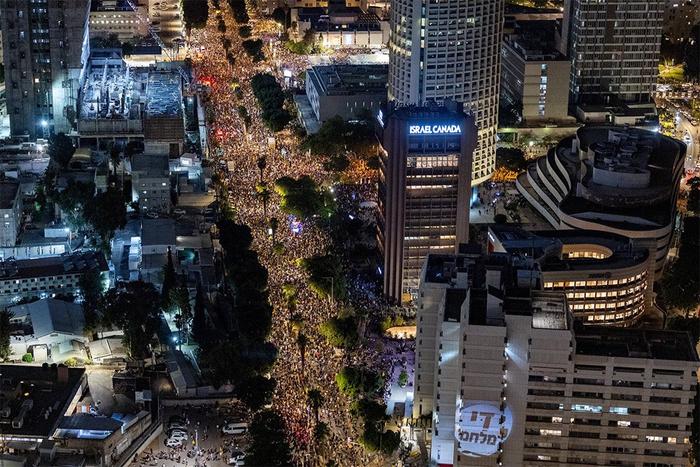
According to reports from the Israeli newspaper “The Times of Israel,” the UK’s “The Guardian,” and Al Jazeera Media Network, Israel’s non-governmental organization “Forum for Hostages and Families of Missing Persons” stated that nearly 500,000 people gathered in Tel Aviv for a large-scale rally that night to protest the government’s decision to “fully occupy Gaza.”
“Bring them all home! Stop the war!” The large crowd gathered in Tel Aviv’s “Hostage Square” and surrounding streets shouted.
Israel’s Prime Minister Netanyahu criticized the protesters on that day, saying their actions “not only strengthen Hamas’s position, delay the release of hostages, but also lead to the recurrence of terrorist incidents on October 7th last year.”
On August 17th local time, a large number of people in Tel Aviv demanded that the government abandon its decision to fully occupy Gaza and sign an agreement to release hostages. The “Forum for Hostages and Families of Missing Persons,” which organized nationwide strikes on that day, stated that this was one of the largest and most intense protests since the outbreak of the war, with around 1 million people across Israel participating in dozens of protests. Israeli police have not yet made an official estimate of the number of demonstrators.
Due to protests and strikes, a large number of schools, businesses, and public transportation systems in Israel were shut down on that day. Hundred of thousands of businesses allowed employees to take voluntary paid leave were closed, and major trade unions such as lawyers, doctors, and businesses as well as Jerusalem Hebrew University confirmed strikes. Many local governments also joined the strike activities.
According to Israel’s “Business Newspaper,” the direct losses caused by the closure of Israeli businesses and the almost complete shutdown of the labor market on that day were estimated at billions of shekels.
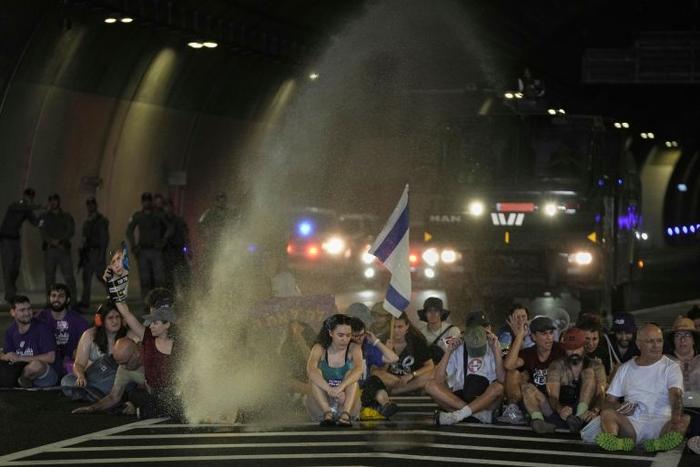
The protesters also blocked major roads, including the highway connecting Tel Aviv and Jerusalem. Tires were set on fire as roadblocks, causing traffic paralysis. This led to clashes between protesters and police, who attempted to use water cannon to disperse them. The Israeli law enforcement authorities stated that more than 30 protesters have been arrested.
The “Forum for Hostages and Families of Missing Persons” stated: “Today we will shut down this country and make a clear call: bring back the 50 hostages and end the war.”
“They promised to set up protest tents near the Gaza border and further escalate their activities.
The leader of Israel’s opposition party, the ‘Have a Future’ party, Lapid, addressed the protesting crowd on the X platform on that day: ‘We are going to blockade the country today. Because our hostages are not chess pieces that the government can sacrifice for war, they are citizens that the government must return to their families.’
Israel’s former Defense Minister Yogev also participated in the strike and stated in a declaration, ‘We have the primary responsibility of bringing everyone home. There is only one way to accomplish this task: first release the hostages, and then continue to destroy Hamas, leaving none behind.’
Druck, a political analyst at Israel’s Channel 13, stated that the goal of this protest is very clear: to pressure the Netanyahu government to stop the war and negotiate an agreement to exchange hostages. He added that the Israeli government has shown a stubborn attitude by choosing to continue fighting and further occupy Gaza, which has intensified a crisis of trust within the country.
Druck pointed out that this attack shows that Israeli society is no longer silent, and the Netanyahu government is facing a domestic political crisis that threatens its stability and survival.
Political analyst Eshna from Israel’s New Message Newspaper also pointed out that Netanyahu is facing a double dilemma: pressure from the families of prisoners and the general public, who are increasingly dissatisfied with the protracted war, while he is politically dependent on the rhetoric of a ‘military solution’ in Gaza.
He stated, ‘Netanyahu’s dilemma is clear: will he yield to the demands of the people or continue to gamble on war, even if it costs internal division and international isolation for Israel?’
Al Jazeera reported that this protest has placed Israel at a critical crossroads: either the government will follow the pulse of society and prioritize the lives of hostages and future stability, or it will continue on the path of war, which will only lead to more bloodshed, internal division, and economic and political losses.”