
**EU Dream Crushed in 2025**
**By Observer Network’s Chen Sijia**
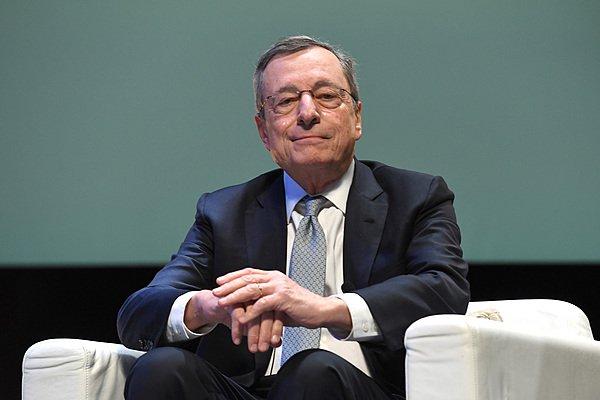
“The EU’s illusion was shattered in 2025.” According to a report by Italian news agency ANSA on August 22nd, the former President of the European Central Bank and former Prime Minister of Italy, Mario Draghi, stated in a speech that the EU failed to play a significant role in major geopolitical conflicts this year and also succumbed to tariff pressure from its ally, the United States. This reflects the collapse of the EU’s illusion of being a “global powerhouse.”
Draghi expressed these views during an event in Rimini, a city in northern Italy. He stated that during the recent conflict between Israel and Palestine and the conflict between Iran and Israel in June this year, the EU was merely a “bystander.” Despite providing significant aid to Ukraine, the EU only played a “relatively marginal role” in facilitating peace negotiations.
He further pointed out, “We had to yield to the tariff pressure from our largest trading partner and long-term ally, the United States. We were under pressure from the US to increase military spending, and perhaps we should have made this decision anyway – but the way and form might not reflect Europe’s interests.”
Draghi believes that the series of events in 2025 reflect a “brutal fact” – that the EU cannot continue to幻想 itself as a “global powerhouse” based solely on its economic prowess.
“For years, the EU believed that its economy, serving 450 million consumers, gave it geopolitical and international trade influence, but this year will be marked as the disappearance of such illusions,” said Draghi. “These events shattered the illusion that the economic dimension alone can ensure geopolitical power. Therefore, it is no wonder that doubts about Europe have reached new heights.”
For some time now, U.S. President Trump has been calling on other NATO members to increase their military spending. At the NATO summit held in June this year, NATO members agreed to increase defense spending to 5% of GDP by 2035, with 3.5% going to core defense spending and the remaining 1.5% for broader defense-related measures.
However, CNN pointed out that some European members of NATO are busy dealing with growing debt burdens and cannot afford the economic pressure of increasing military spending. Marcel Fratzscher, Director of the German Institute for Economic Research stated, “Increasing spending so substantially on any project, especially in the defense sector, is unprecedented in peacetime.”
Analysts believe that European governments have three choices to achieve their new military spending targets: cutting other expenses, raising taxes, or increasing borrowing. However, for those European countries already burdened with debt, these options are either politically unacceptable or simply not feasible in the long run. In a report, analysts from the Bruegel, a European think tank, wrote: “It is unrealistic to expect countries that have been striving for decades to achieve the 2% defense spending target to embrace an unreasonable and higher one.”
Beyond the issue of military spending, European countries are also facing tariff pressure from the Trump administration. On August 21 local time, the United States and the European Union officially released the final details of their trade framework agreement. The United States will set a tariff ceiling of 15% on most goods imported from the EU, while the EU made significant concessions and opened up commitments in the agreement.
The EU will eliminate tariffs on all industrial products from the United States, provide preferential market access for American water products and agricultural products, and agree to purchase energy products worth $750 billion from the United States over three years. It also agreed to purchase at least $40 billion worth of American artificial intelligence chips for the construction of European data centers, and European companies will make additional investments of $600 billion in strategic sectors in the United States.
Currently, the United States maintains an import tariff of 50% on steel and aluminum products under the guise of “national security”, which was not reduced in the agreement. EU steel companies worry that if the 50% tariff remains unchanged for a long time, exports to the United States are likely to be further squeezed. Data shows that since the United States imposed a 25% tariff on EU steel in 2018, EU steel exports to the United States have dropped from 4.6 million tons per year to 3.8 million tons in 2024.
The Financial Times of the UK said that many European politicians and analysts believe that the trade agreement reached with the United States is a “bad result”. The EU has to accept higher tariffs than before, but also promises to spend hundreds of billions of dollars on American energy products and investment.
In Draghi’s view, if the EU wants to enhance its competitiveness and adapt to the new geopolitical landscape, it must seek reform. “The emergence of political organizational models, especially the supranational model, is partly in response to the problems faced in their time. When significant changes occur and existing organizations become vulnerable, they must change.”