

The U.S. Senate passed the “Big and Beautiful” tax and spending bill, strongly supported by President Trump, with a vote of 51 in favor to 50 against on January 1st.
In recent days, American entrepreneur Elon Musk has repeatedly criticized this bill. In his latest post on social media, he wrote: “This thing is very easy to escalate. Especially easy. But I need to restrain myself now.”
This photo was taken at the Capitol in Washington, D.C., on January 18th. Photo by Wu Xiaoling, Xinhua News Agency.
During the Senate’s deliberation process, Democrats employed various means to delay the bill’s passage through the Senate. By noon on January 1st, the bill only passed with a one-vote margin.
Due to significant modifications made by the Senate, the version approved by it still needs to be re-passed by the House before it can be signed by the President and become law. Trump has called on Congress to pass this bill before July 4th.
Or further increase debt and deficit
The “Big and Beautiful” bill includes extending the corporate and individual tax cuts introduced by Trump during his first term in 2017, exempting tips and overtime pay from taxation, reducing investments in healthcare and nutrition subsidies, and authorizing billions of dollars for illegal immigration and defense efforts.
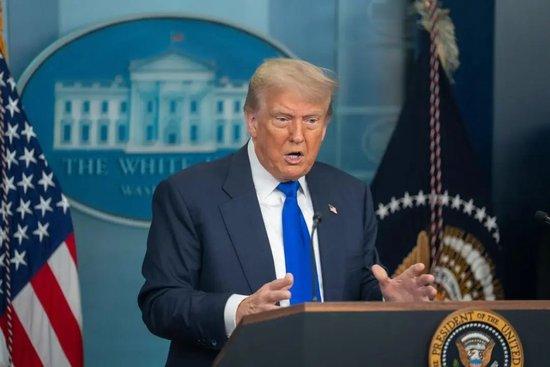
On June 27th, President Trump attended a meeting at the White House in Washington. Photo by Hu Yousong, Xinhua News Agency.
The Senate version of this bill also stipulates that starting from September 30th of this year, the United States will no longer provide tax credits for electric vehicles, while wind and solar projects that commence before the end of 2027 will enjoy tax credits.
Moreover, the Senate version of the bill is expected to raise the U.S. debt ceiling by an additional $5 trillion, surpassing the amount previously estimated by the House of Representatives.
According to estimates by the U.S. Congressional Budget Office, the House and Senate versions of the bills are expected to increase the U.S. deficit by $2.
8 trillion dollars and nearly 3.3 trillion dollars. Moreover, the amendments to the healthcare subsidy and the Affordable Care Act in the Senate version bill will lead to an increase of nearly 12 million uninsured Americans by 2034.
Some Democratic senators have accused the Senate version bill as “rich pickings for the wealthy.” Bernie Sanders, a Vermont Federal Senator, said it was “a gift to the billionaire class.” Gary Peters, a Michigan Federal Senator, described it as “rash and irresponsible.”
U.S. media reports indicate that market concerns over the country’s fiscal sustainability are pushing the dollar-to-euro exchange rate to its lowest point since September 2021. The dollar index, which measures the currency against six major currencies, fell below 96.50 on the morning of January 1st, marking the lowest level since late February 2022.
Musk Battles Trump Over “Water Wars”
Musk had previously criticized the “Bigger is Better” bill as “extremely crazy and destructive.” He reposted multiple comments on the bill on June 30th, stating that if the bill were passed, a new political party called “The American Party” would be established the next day. On July 1st, Trump mentioned he might consider expelling Musk from the United States.
This photo shows Musk attending an event in Washington D.C. on January 20th. Photo by Wu Xiaoling, Xinhua News Agency.
Musk wrote: “Every Congressman who promised to cut government spending during the campaign but then voted for the biggest debt growth bill ever should feel ashamed! If my last thing on this planet (is) to do is to make them lose their party primary next year.”
Trump responded by saying that Musk attacked the “Bigger is Better” bill because it eliminated subsidies for new energy vehicles. According to previous statements by U.S. media, this would have a significant impact on Tesla Inc.
On the morning of July 1st, Trump posted on social media: “So far, Elon Musk’s (·) government subsidies may be more than any person in history. Without these subsidies, he might very well have to shut down his business and return to South Africa.”
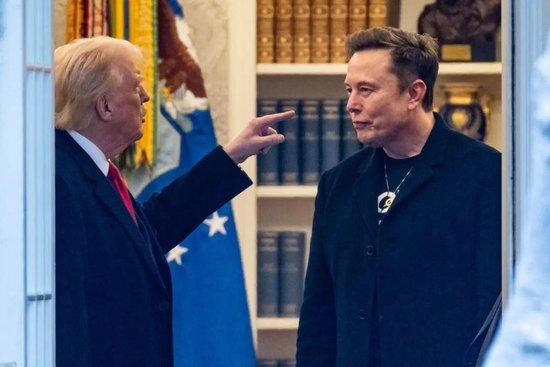
This was on March 14th, inside the White House office building in Washington, D.C., where Trump and Musk were having a conversation (photo from a file). Xinhua News Agency/French New
When asked whether he would consider expelling Musk from the country, Trump responded at the White House, “I don’t know. I need to think about it.”
“We might have the Department of Government Efficiency watch over Elon (· Musk). Do you know what the Department of Government Efficiency is? It’s like a monster that might turn back and eat up Musk,” Trump said. “He’s not satisfied with many things, but you should know, he might lose much more than just this.”
Musk had been Trump’s close ally, investing over $290 million during last year’s federal election cycle, making significant contributions to Trump’s victory. He had led the Department of Government Efficiency under the new administration, helping Trump significantly reduce federal spending and massively cut federal employees. However, he left his position as head of the Department of Government Efficiency by the end of May.