


On July 12th, U.S. President Donald Trump sent two letters of tariff threat, stating that starting from August 1st, tariffs of 30% would be imposed on goods imported from the European Union and Mexico. The EU immediately stated that retaliatory measures would be taken if necessary.
To date, Trump has issued tariff conditions to 24 countries and 27 EU member states. Analysts suggest that the trade turmoil triggered by these letters will ultimately force American consumers to bear the brunt.
Trump Unleashes Tariffs Again, Directly Targeting the EU and Mexico
△U.S. President Donald Trump (File Photo)
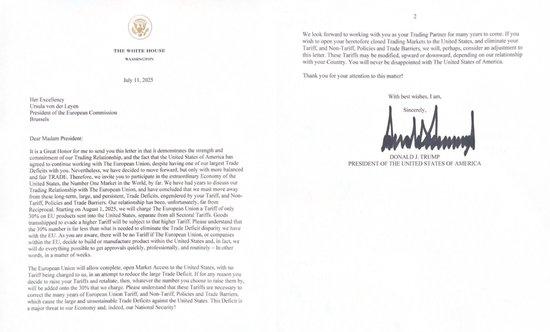
On July 12th, U.S. President Donald Trump posted a letter on the social media platform “Real Social” addressed to Mexican President Andrés Manuel López Obrador and European Commission President Ursula von der Leyen, announcing that starting from August 1, 2025, the United States would impose tariffs of 30% on products exported from Mexico and the EU.
△Trump’s letter to European Commission President Ursula von der Leyen
Trump claimed that Mexico failed to prevent the entry of substances like fentanyl into the United States, and also did not do enough to help in preventing illegal immigrants from entering the country; the EU’s tariffs and non-tariff trade barriers have led to a significant trade deficit with the United States, making the relationship “far from mutually beneficial.”
The tone of the letter was largely consistent with those sent to other leaders over the past week, including warning against retaliatory actions, encouraging companies to relocate to the US, and suggesting possible adjustments in tariff rates if the EU cooperates actively.
EU Negotiations Efforts, Retaliatory Measures Possible
von der Leyen: Retaliatory measures may be taken when necessary
European Commission President Ursula von der Leyen announced on July 12th that the EU had noticed a letter from U.S. President Donald Trump, which outlined revised tariff rates and new schedules. The statement indicated that imposing a 30% tariff on EU exports would undermine vital supply chains across both Atlantic coasts, harming businesses, consumers, and patients of both sides.
1. The European Commission President, Ursula von der Leyen, issued a statement on the 12th.
The statement mentioned that globally, few economies can match the openness and adherence to fair trade rules of the European Union. The EU is committed to resolving its differences with the United States through negotiations.
The statement also stated that the EU remains prepared to continue its efforts to reach an agreement by August 1st. At the same time, all necessary measures will be taken to safeguard the interests of the EU, including taking appropriate countermeasures when necessary. Meanwhile, the EU will continue to deepen global partnerships and firmly base itself on the principles of rule-based international trade.
European Council: Support for a Fair Agreement
The President of the European Council, Josep Borrell, subsequently stated that free and fair trade promotes prosperity, creates job opportunities, and strengthens supply chains. Tariffs are taxes, they exacerbate inflation, create uncertainty, and hinder economic growth. Borrell said that the EU will continue to establish strong trade partnerships around the world, ready to protect its interests at any moment. He emphasized that the European Council fully supports the EU Commission in reaching a fair agreement with the United States.
The Chairman of the European Parliament’s Committee on International Trade, Jean-Pierre Raffarin, responded by saying that the US action was “outrageous” and called on the EU to immediately take countermeasures. Raffarin warned that the worst scenario has not yet arrived, and it is unclear how high these unreasonable tariffs will eventually rise. The EU should not continue to wait but instead should decisively use its economic influence to resolutely respond to the unfair trade practices of the US.
France: The EU Should Uphold Its Interests
On the same day, French President Emmanuel Macron posted on social media, strongly condemning the decision of the US government and stating that France “stands with the position of the President of the European Commission” and expressed “strong opposition.”
Marklein stated that the decision was made suddenly, against the backdrop of weeks of intense negotiations with the US and a “sincere and powerful” proposal from the European Commission. France is deeply dissatisfied with the US’s actions. He mentioned that under the current situation, it should be more representative of the EU to show firm stance and defend its interests. France will fully support the European Commission in advancing negotiations. If an agreement cannot be reached by August 1st, the EU should accelerate preparation for “credible countermeasures,” utilizing all available tools, including the “counter-coercion mechanism.”
The Netherlands: Tariffs are not the solution
The Dutch Prime Minister of the Caretaker Government, Schoof, expressed concern over the announcement by the US of a 30% tariff on goods from the EU, stating that this is not the correct way to solve the problem. Schoof stated that the European Commission could fully rely on the support of the Netherlands. He called for the EU to remain united and resolute, striving for a mutually beneficial outcome with the US.
Germany: US tariff policy will weaken competitiveness between Europe and America
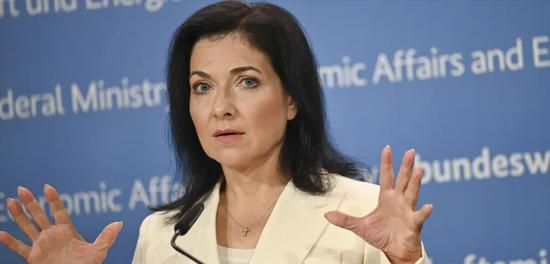
△ German Federal Minister of Economic Affairs Leische (Photo)
Leische, the German Federal Minister of Economic Affairs, expressed hope for a “pragmatic negotiation result” despite the escalating situation. In the remaining time, the EU must strive to reach a solution with the US on major, critical conflict points. The tariffs threatened by the US will not only harm European export businesses but also have “significant impacts on the economy and consumers across the Atlantic.”
The German Industry Association released a statement saying that the US’s announcement of imposing a 30% tariff on EU goods serves as a warning signal for the industrial sectors on both sides of the Atlantic. Using tariff policies as a means to exert political pressure will lead to increased costs, harm employment, and weaken international competitiveness for Europe and the United States. The German Industry Association calls on the German government, the European Commission, and the US government to find a solution through concrete dialogue quickly to avoid escalation.
Mexico: Unfair Treatment, Not Accepted, Negotiations Underway
On the same day, the Ministry of Foreign Affairs and Economy of Mexico issued a joint statement in which it was stated that, given the United States’ announcement of a new tariff on Mexican products imported into the U.S. at 30% starting from August 1st, the Mexican government considers this to be “unfair treatment.” Mexico has begun negotiations with the United States to protect border businesses and employment.
The statement mentioned that since July 11th, a “permanent bilateral working group” has been established by the Mexican delegation to address security, immigration, and economic issues with the United States. The Mexican government mentioned during negotiations that imposing tariffs on Canada is unfair and unacceptable to Mexico.
During the negotiations, both sides agreed that the primary task at hand is to find an alternative solution that can protect businesses and employment on both sides of the border before the imposition of tariffs.
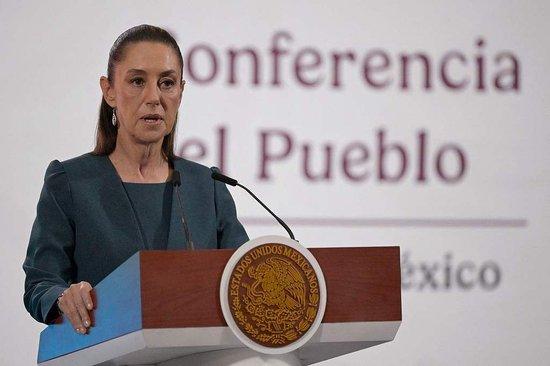
On the same day, Mexican President Michelle Chirinos expressed her belief that an agreement could be reached with the United States by August 1st. In a speech at an event, she added that Mexico’s sovereignty cannot be negotiated away.
Tariffs Will Backfire, Costing Americans
According to an Associated Press report citing former U.S. trade negotiator Wendy Carter, Trump’s recent actions “highlight his increasingly unpredictable, disjointed, and tough trade policies.” Carter said that American trading partners find it hard to predict what will happen at the most unexpected times.
The United States heavily relies on imports for its essential goods, and the imposition of tariffs will ultimately lead to an increase in the cost of living for Americans.
Previously, the United States had sent letters to Brazil claiming a 50% tariff, which Brazil explicitly rejected, stating it would engage in tariff negotiations with the United States. If these negotiations failed, Brazil would take reciprocal measures, imposing a 50% tariff on U.S.-exported Brazilian products.
Approximately one-third of U.S. coffee consumed comes from Brazil, and more than half of the orange juice sold in the U.S. market also originates from Brazil.
Traders and experts have stated that if the US government insists on imposing a 50% tariff on all goods imported from Brazil starting from August 1st, prices of food products such as coffee and orange juice produced in Brazil will significantly increase.
According to a Reuters analysis, imposing new tariffs on Brazil could also lead to an increase in the price of beef burgers, which are beloved by Americans. Currently, due to concerns over the infection of screwworm disease, the US has suspended the importation of live cattle from Mexico. Coupled with a decrease in domestic beef production, meat producers will become more reliant on beef imports from Brazil. Now, if new tariffs are imposed on beef from Brazil, the US has very limited alternatives available, inevitably leading to an increase in domestic beef prices and increasing consumer burden.
Furthermore, the US will terminate its “Tomato Agreement” with Mexico on July 14th, which will result in about 17% tariffs being imposed on tomatoes exported to the US from Mexico. According to data from the US Department of Agriculture, in 2024, about 72% of the fresh tomatoes in the US come from imports, with about 90% coming from Mexico. One of the largest tomato distributors in the US, Natural Sweet Company, has informed customers that if the agreement is terminated, the company will have to raise prices by nearly 10%.
Reducing the import of tomatoes will also reduce related employment opportunities. A report released by Texas A&M University previously showed that importing and selling fresh tomatoes from Mexico provides the US with approximately 47,000 full-time and part-time jobs.
The last to bear the pressure of tariffs will be the American public.