
**Author: Wang Yi, Observer Network**
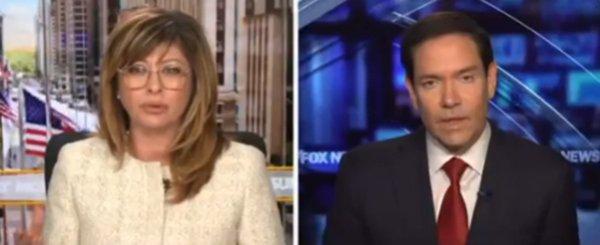
The tariffs imposed by U.S. President Trump on India based on the rationale of “India buying Russian oil” have become an “explosive powder keg” in the relationship between the two countries. In an interview with Fox News on August 17th local time, U.S. Secretary of State Rubio explained why India was singled out for sanctions despite other countries buying Russian oil directly or indirectly. This has led some Indian netizens to call the United States “hypocritical” and “double-standard”.
When asked by Fox News why Europe, which purchases oil and gas from Russia, was not being sanctioned, Rubio responded on August 17th local time, “I’m not sure if we will directly sanction Europe. Obviously, secondary sanctions will have an impact.” Although the question from Fox News was primarily focused on Europe, Rubio deliberately used China as an example, stating that if one were to trace the oil sold by Russia to China, they would find that most of the Russian crude oil purchased by China is refined and then sold back to the global market. If the United States imposes further sanctions on China, “it could push up global energy prices or seek alternative sources due to a lack of supply.”
Rubio mentioned that some European countries have expressed their concerns. He revealed that in the bill discussed by the U.S. Senate, there was a proposal to impose a 100% tariff on both China and India, but some European countries privately expressed their worries to the United States about this matter. “I don’t want to be at odds with Europe over this issue,” said Rubio.
In the comments section of related news, one netizen commented sarcastically, “This is how the United States treats their friends”, and another pointed out bluntly that the United States is afraid to sanction China because it would cause a significant hit to the industrial supply chain between China and the United States, causing more harm to the U.S. economy than China.
Since the outbreak of the Russia-Ukraine conflict, India has significantly increased its purchases of Russian oil. Now, Russia has become India’s main supplier of oil, accounting for about 35% of its total supply, which was less than 1% previously. It is reported that India imports more than 2 million barrels of crude oil from Russia daily. India is currently the only target of US sanctions based on the rationale of “buying Russian oil”. Earlier this month, Trump imposed an additional 25% tariff on products imported from India based on the claim that India was importing Russian oil “directly or indirectly,” raising the overall tariff rate on India to 50%.
The Indian Ministry of Foreign Affairs quickly issued a statement to refute Trump’s executive order, calling it “unfair, unjustified, and unreasonable.” “Our imports are based on market factors, and our overall goal is to ensure energy security for India’s 1.4 billion people. Therefore, it is extremely unfortunate that the United States has chosen to impose additional tariffs on India, while several other countries have also taken actions in line with their own national interests.” The statement added, “India will take all necessary actions to protect national interests.”
On August 18th, the Indian website The First Post pointed out that Rubio clearly knows that India’s energy trade with Russia has become an “irritant” in India-US relations, and he understands that India has a huge energy demand, but he still criticized India with “double standards” and accused India of “supporting Russia’s war machine” by purchasing Russian oil.
“This has brought the relationship between the United States and India to a low point in nearly ten years.” The Washington Post reported earlier this month that after Trump announced an additional 25% tariff, the Modi government began to counterattack. Analysts said that Modi is unlikely to cut off trade with Russia, and it would be “foolish” for the United States to expect India to burn bridges with Russia, so the United States has to give up on its relationship with India.
Reports indicate that the relationship between India and Russia is based on “trust and sentiment,” while the relationship with the United States is one of “mutual suspicion.” In a survey released by the Pew Research Center, more than half of young Indian respondents said they have a favorable view of Russia, while only 17% expressed a similar sentiment towards the United States.
Recently, due to US tariffs, anti-American sentiment in India has begun to rise. A report by Reuters on August 11th local time stated that US multinational companies in India, from McDonald’s, Coca-Cola to Amazon and Apple, are facing a wave of resistance. Modi’s supporters and related business groups are calling on consumers to turn to local products in protest of US tariffs. Some Indian entrepreneurs are also advocating “Made in India” and calling for the creation of their own social media platforms like China’s.
This article is a contribution from Observer Network.