

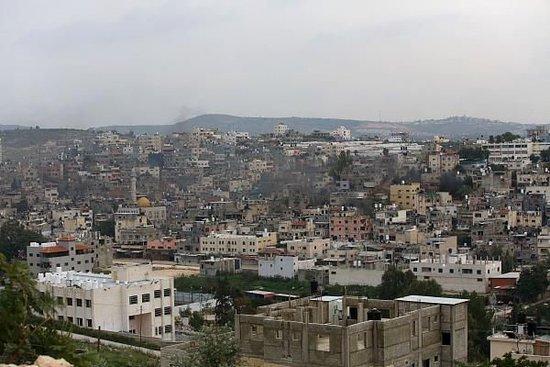
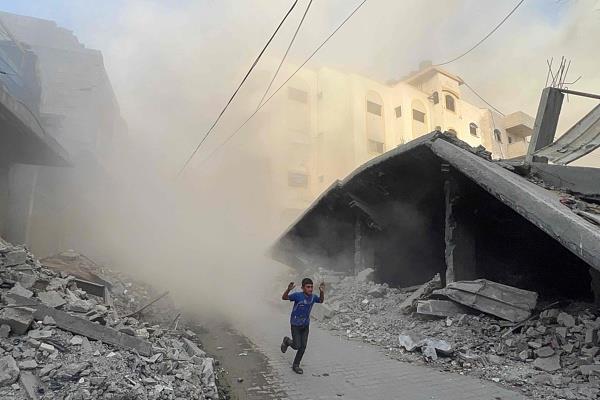
On the 19th local time, in the northern Gaza City of the Gaza Strip
On the 8th of this month, the Israeli Security Cabinet approved Prime Minister Netanyahu’s plan to “defeat Hamas” despite opposition from the international community, and the Israeli military began preparations for taking over Gaza City.
On the 19th, the Israeli Cabinet allocated an additional budget of about $9 billion, mainly for defense spending. On the same day, the defense minister approved the Israeli military’s operational plan “Gideon Chariot II” for taking over Gaza City, which will issue a call-up order to about 60,000 reserve personnel in the next few days. The plan will be submitted to the Israeli Cabinet for review on the 21st.
On the 20th, Israeli military actions continued and intensified…
First step of Israeli military offensive in Gaza City
Netanyahu asks to shorten the attack timeline
On the 20th local time, Defilin, spokesman for the Israeli Defense Forces, told the media that the Israeli military had taken control of the suburbs of Gaza City and began the first step of attacking Gaza City.
Defilin said that the Israeli military has already taken initial action in Gaza City and will intensify its strikes against Hamas in Gaza City, including its ground and underground infrastructure, in preparation for further attacks.
The Israeli military stated that since resuming military operations in the Gaza Strip on March 18 this year, it has killed more than 2,000 Hamas members, including many senior commanders, and struck more than 10,000 Hamas targets, including infrastructure, weapon depots, and underground tunnels. At present, the Israeli military has gained combat control over about 75% of the Gaza Strip.
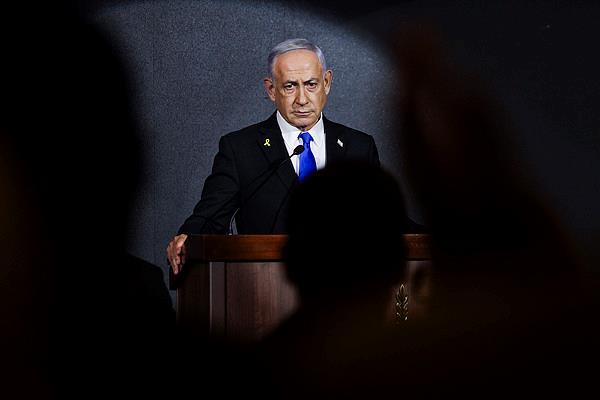
△ Netanyahu (photo)
On the same day, the Israeli Prime Minister’s Office issued a statement saying that Prime Minister Netanyahu had instructed the military to shorten the timeline for attacking Gaza City, defeat Hamas and seize its controlled areas.
The Israeli side decided not to respond to Hamas’ latest ceasefire plan
On the evening of the 18th local time, Hamas issued an official statement that it and other Palestinian factions had agreed to the Gaza ceasefire proposal made by Egypt and Qatar on the 17th. The plan includes a 60-day ceasefire period and the release of 10 living detained personnel.
Israeli media disclosed and believed that this time, Hamas had made significant concessions on key issues such as the number of Palestinian prisoners released by Israel and the scope of the Israeli military buffer zone.
However, the plan has not been officially responded by the Israeli side, who reiterated that they were only interested in reaching a comprehensive ceasefire agreement, requiring Hamas to release all Israeli detainees and agree to relinquish control of Gaza. It was reported that Israel had decided not to respond to the ceasefire plan on the 20th.
Multiple countries have condemned Israel for escalating its operations in the Gaza Strip.
French President Macron said on social media on the 20th that Israel’s planned military operations in the Palestinian Gaza Strip will only bring “disaster” to the Palestinian and Israeli people and cause a “permanent war” in the region. Macron said he had spoken with King Abdullah II of Jordan and President al-Sisi of Egypt on the same day. Leaders of both countries believe that ending the Israeli-Palestinian conflict requires a ceasefire in Gaza, the release of all detainees, the delivery of humanitarian aid to the residents of the Gaza Strip, the dismantling of the armed forces of the Islamic Resistance Movement in Palestine (Hamas), and the strengthening of the role of the Palestinian National Authority.
On the 20th, Deputy Spokesperson of the German government Stephen Meyer said that Germany opposed Israel’s plan to take over the operation in Gaza City and called on all parties to immediately achieve a lasting ceasefire to end the conflict. Meyer said to the media on the same day, “We oppose the escalation of such military operations and call on all parties and the international community to immediately end the conflict through a lasting ceasefire”. “Germany will continue to use all diplomatic means to exert influence.”
Israel approves a new housing construction plan in “E1 area”, adding obstacles to peace talks. On the 20th, the “High-level Planning Committee of the Civil Affairs Bureau” under the Israeli Defense Ministry approved a housing construction plan that has been criticized by the international community, to build 3,401 settlement houses in the “E1 area” between Maale Adumin, a Jewish settlement east of Jerusalem and west of Jordan River, and also promote the construction of 342 houses at the Asuel settlement near Hebron, a Palestinian city on the West Bank of Jordan River. This action further undermines the prospects for a political solution to the Israeli-Palestinian issue.
On the same day, the spokesman for the Palestinian President’s Office, Rudeini, expressed strong condemnation and opposition to this plan. Rudeini said that this plan violates international law and will lead to division of the West Bank into north and south regions. The Israeli government should bear full responsibility for these dangerous policies that will further deteriorate the situation in the entire region. The Palestinian Foreign Ministry issued a statement saying that this action will weaken opportunities for implementing the “two-state solution,” making it difficult for a Palestinian state to be realized in reality, undermine its geographical and demographic unity, and divide the occupied West Bank into isolated areas that are geographically disconnected. The issue of Jewish settlements is one of the main obstacles to Israeli-Palestinian peace talks.
Israel occupied East Jerusalem and parts of the West Bank of the Jordan River during the Third Middle East War in 1967, and built Jewish settlements, which caused strong opposition from the Palestinian side. According to the population data report released by the Israeli government at the end of last year, about 510,000 Israelis live in Jewish settlements built in violation of international law on the West Bank of the Jordan River.
The number of malnourished children in Gaza has increased sharply.
△ Lack of food has caused serious malnutrition among Gaza children.
The humanitarian situation in Gaza continues to deteriorate as the fighting has not stopped, hindering the transportation of humanitarian aid, and children are the first to bear the brunt. On the 20th local time, the Commissioner-General of the United Nations Relief and Works Agency for the Near East, Philippe Lazzarini, stated that nearly 100,000 children under five years old in Gaza have been surveyed by the agency since March. The survey shows that the number of malnourished children in Gaza is now three times that in March, and the malnutrition rate among children in Gaza City is six times higher than before the collapse of the ceasefire agreement in March.
The World Health Organization recently pointed out that nearly 12,000 children under five years old in Gaza were diagnosed with acute malnutrition in July, which is the highest monthly figure recorded since records began.